How To Calculate Ideal Body Weight?
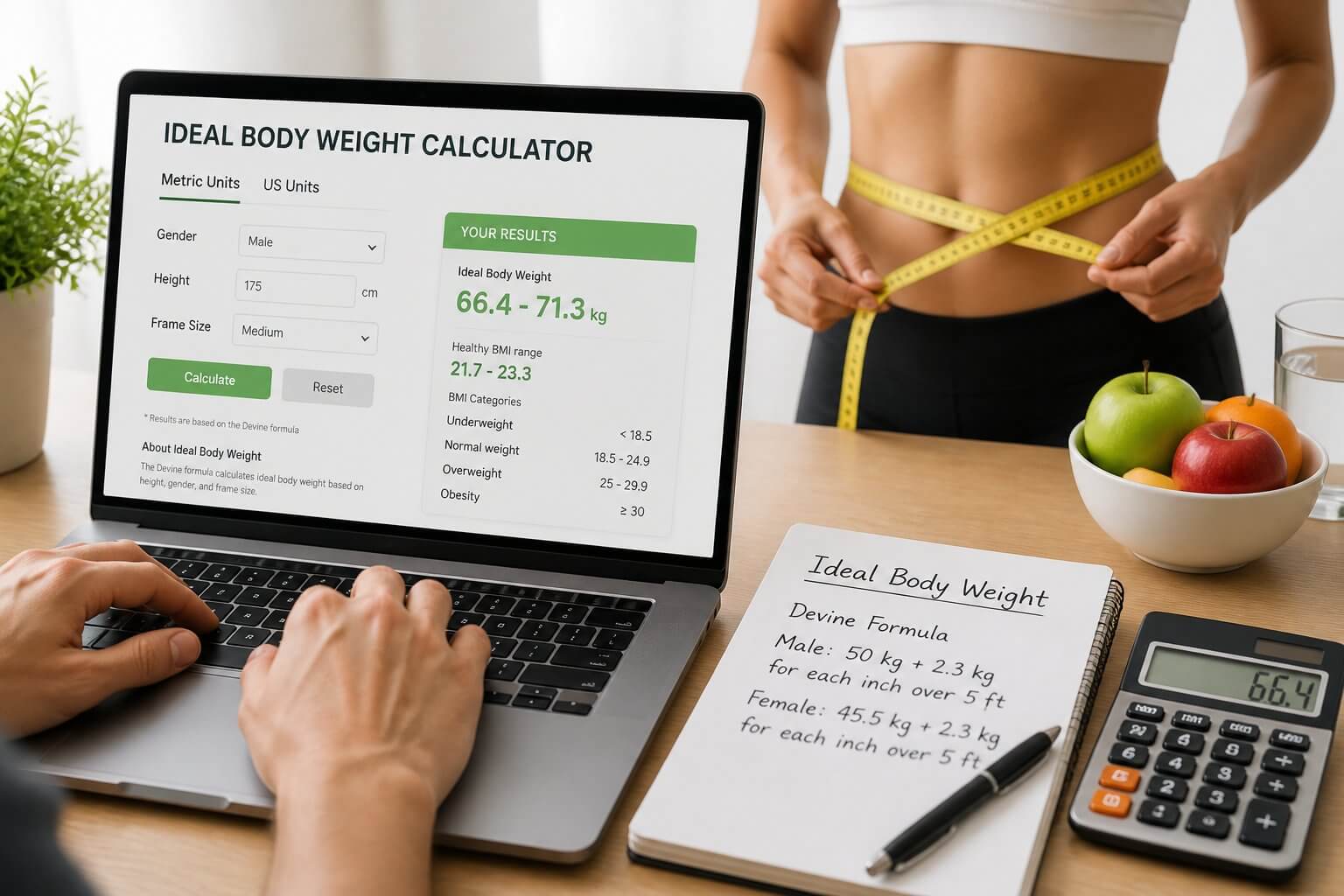
A healthy body weight is a range, not a single magic figure. Several formulas estimate a sensible target from your height and sex, giving doctors a quick start for dosing and goals. Use the result as a guide, then add context from body fat and frame.
Want a healthy target range?
Try the Ideal Weight CalculatorThe classic formulas
Most estimates trace back to a few named equations. Devine, born in the 1970s for drug dosing, sets a base weight at five feet of height and adds a fixed amount for each inch above that. Robinson, Miller, and Hamwi tweak those numbers, so each returns a slightly different figure.
Written plainly, Devine gives men 50 kilograms plus 2.3 for every inch over five feet, and women 45.5 plus 2.3 per inch. Taller frames earn more, shorter frames less.
Why a range works better
People differ in build, muscle, and bone. A lean, muscular athlete can weigh more than a formula suggests while carrying little fat. Treat the number as a midpoint, then allow a healthy band around it rather than chasing one exact value.
Health rarely hinges on a single kilogram. Energy, strength, and how clothes fit tell you more than a stubborn target on the scale.
A worked example
Picture a woman 165 centimetres tall, about five feet five inches, so five inches over five feet. Start at 45.5 kilograms, add 2.3 for each of the five inches, near 11.5, and you reach roughly 57 kilograms as a midpoint. Build a sensible band a few kilograms either side.
Skip the arithmetic with our Ideal Weight Calculator. Round it out with the BMI Calculator, the Body Fat Calculator, and the Lean Body Weight Calculator.
Reaching a healthy weight
Slow change sticks. Move most days, build meals around protein and vegetables, and let your daily calorie needs set a gentle deficit or surplus. For trusted weight guidance, the National Institutes of Health keeps clear pages.
A starting point, not a finish line
Treat any formula figure as a doorway, not a destination. Frame size, muscle, and age all bend the result. A broad shouldered lifter can sit above the estimate while looking lean and strong, and a petite person may feel best a little below it. Listen to energy, sleep, and strength alongside the scale.
Health lives in habits more than in a target weight. Regular movement, balanced meals, and good sleep shape wellbeing whatever the number reads. Crash diets that chase a precise figure tend to strip muscle and rebound.
Use the estimate to set a sensible direction, then check progress with body composition rather than weight alone. A waist that shrinks while strength holds is a healthier win than a smaller number earned by losing muscle. Aim for the version of yourself that moves and feels well.
In short, a healthy weight is a band you live well within, not a single number to obsess over. Formulas point toward a sensible midpoint, and your frame, muscle, and energy fill in the rest. Build steady habits, move most days, and let body composition guide you more than the scale. Reach for the version of yourself that sleeps well, lifts strong, and feels light on your feet. That target, broad and forgiving, serves your health far better than a precise figure that ignores who you are.