How To Calculate Age Of A Dog?
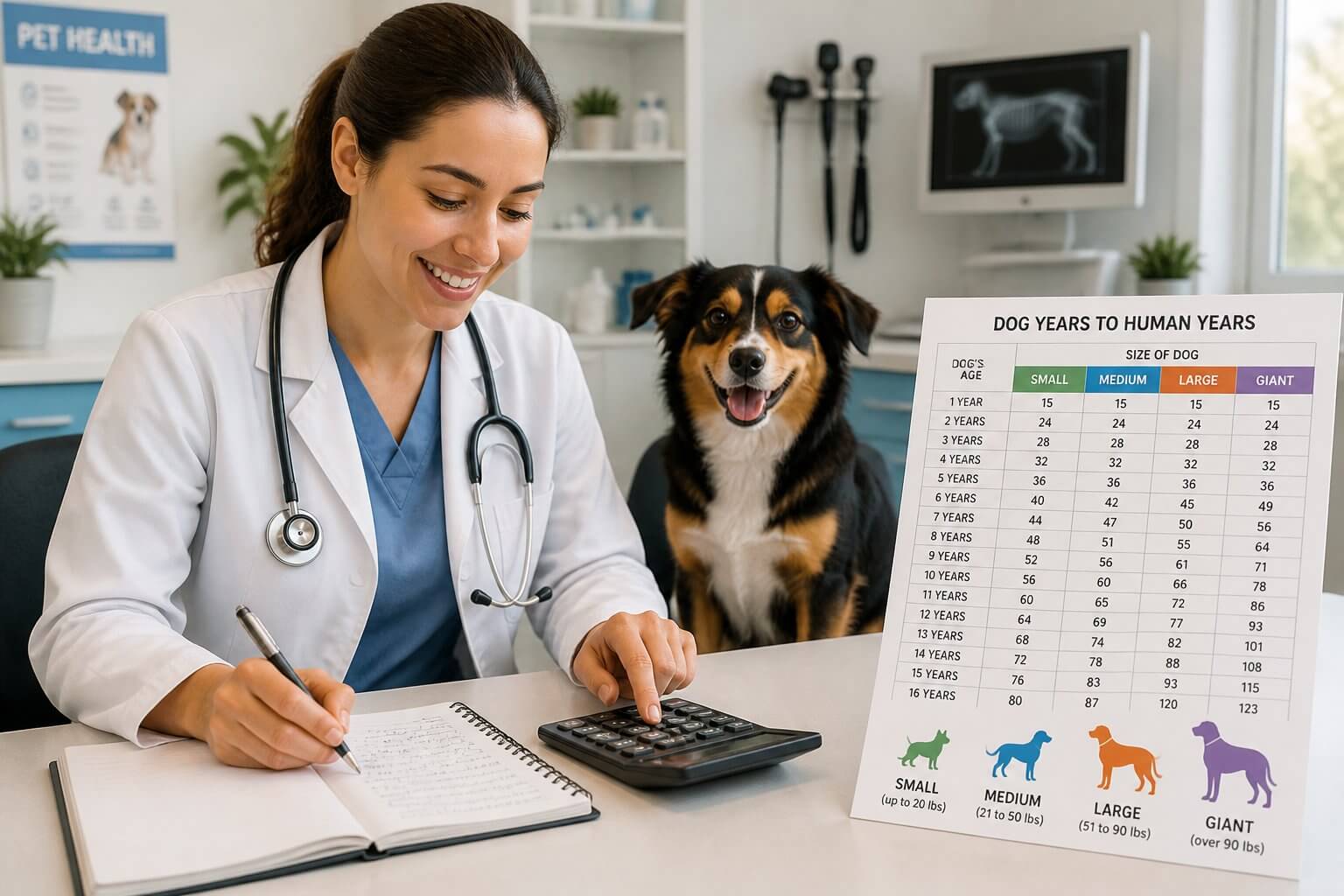
Dogs age faster than people, but not at a simple seven to one rate. That old rule misses how quickly puppies mature and how breed size changes the pace. A better method gives your dog a fairer human age.
Want your dog's real age?
Try the Dog Age CalculatorBeyond the seven year myth
The seven year rule is a rough shortcut, nothing more. Dogs grow up fast in their first two years, reaching the rough equivalent of the mid twenties before slowing down. Lumping every year into seven hides that early surge.
Modern estimates use a smoother curve. One research backed formula multiplies the natural logarithm of your dog's age by 16, then adds 31 for a human equivalent.
Why size and breed matter
Bigger dogs age quicker later in life. Small breeds often live well into their teens, while giant breeds may reach senior years by six or seven. Genetics, not only size, shapes the pace, so charts adjust by weight class.
A small terrier and a great dane of the same age sit at very different life stages. Care needs shift along with that.
A worked example
Picture a five year old dog using the research formula. Take the natural log of five, near 1.61, multiply by 16 to get about 26, then add 31. The result lands near 57 human years. Size based charts may shade that up or down.
Let our Dog Age Calculator do the math by size and breed. Track health with the Dog Weight Calculator, and cat owners can try the Cat Age Calculator.
Caring for each stage
Match care to life stage, not only years. Puppies need training and vaccines, adults need exercise and dental care, and seniors need gentler activity and regular checkups. For breed specific aging guidance, the American Kennel Club is a trusted resource.
Signs of aging to watch
Dogs show their years in quiet ways. Greying around the muzzle, slower mornings, and a little stiffness after rest often arrive first. Cloudier eyes, lighter hearing, and shifting sleep patterns may follow. Spotting these changes early lets you adjust care before small issues grow.
Stage shapes the right routine. Puppies thrive on training, socialising, and a full vaccine schedule. Adults need steady exercise, dental care, and a balanced diet. Seniors do best with gentler activity, softer bedding, and more frequent checkups to catch problems early.
Partner with your vet as the years add up. Regular visits, weight checks, and bloodwork keep an aging dog comfortable and catch trouble while it is small. Knowing your dog's human equivalent age, adjusted for size, helps you anticipate each stage and give the right care at the right time.
In the end, your dog ages on a curve, not a flat seven to one rule. Puppies race through early years, then the pace settles and bends with breed size. A modern formula, adjusted for weight class, gives a fairer human equivalent. Match care to each life stage, watch for the quiet signs of aging, and partner with your vet as the years add up. Understanding your dog's real age helps you give the right care at the right time.